

Heydar Aliyev Center
Zaha Hadid's building flows like a wave — a lesson in architecture without right angles.
heydar-aliyev-merkezi.tut.az
Place
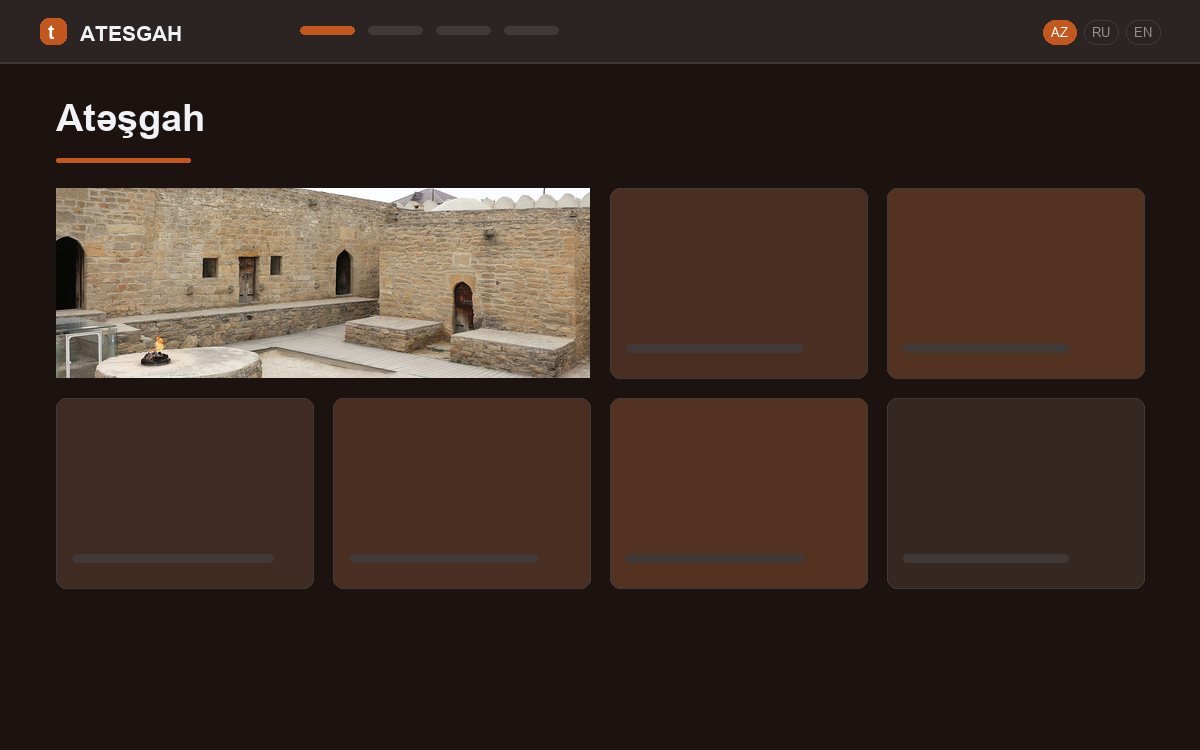
A pentagonal temple in Surakhani with a gas flame at its centre — the end of a pilgrims' road.
The site is in progress. The domain is reserved; design and texts are under way.
How it will look: each site gets its own colour scheme and structure.
Ateshgah stands in Baku's Surakhani settlement. The complex took shape in the 17th–18th centuries: a fortress-like wall, cells around the perimeter and an altar in the middle, above a natural gas vent.
Indian, Persian and Sikh inscriptions survive on the cells — merchants and ascetics from India lodged here. It has been a museum since 1975.
The stone tablets and their translation
Who came, and from where
Gas, altar, ritual
European accounts and engravings
Zaha Hadid's building flows like a wave — a lesson in architecture without right angles.
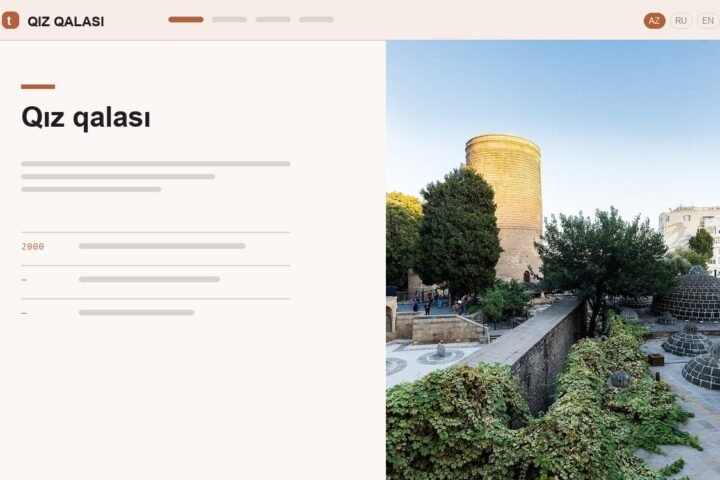
Baku's emblem: an eight-tier stone cylinder and the questions nobody has settled.
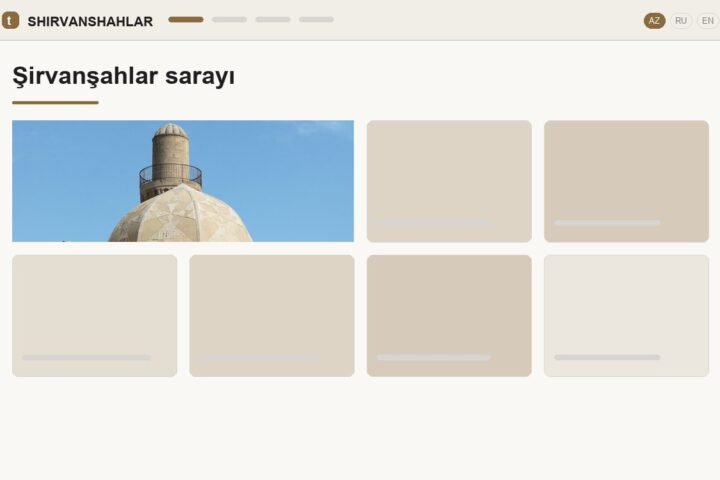
A 15th-century palace complex: divankhana, mosque, bathhouse and the rulers' tomb.