


Pirshagi
A settlement on the Caspian shore: a sandy beach, a 17th-century mosque and the shrine behind its name.
pirshagi.tut.az
Transport
From the 1889 horse tram to the rails lifted in 2004 — the story of a network that vanished.
The site is in progress. The domain is reserved; design and texts are under way.
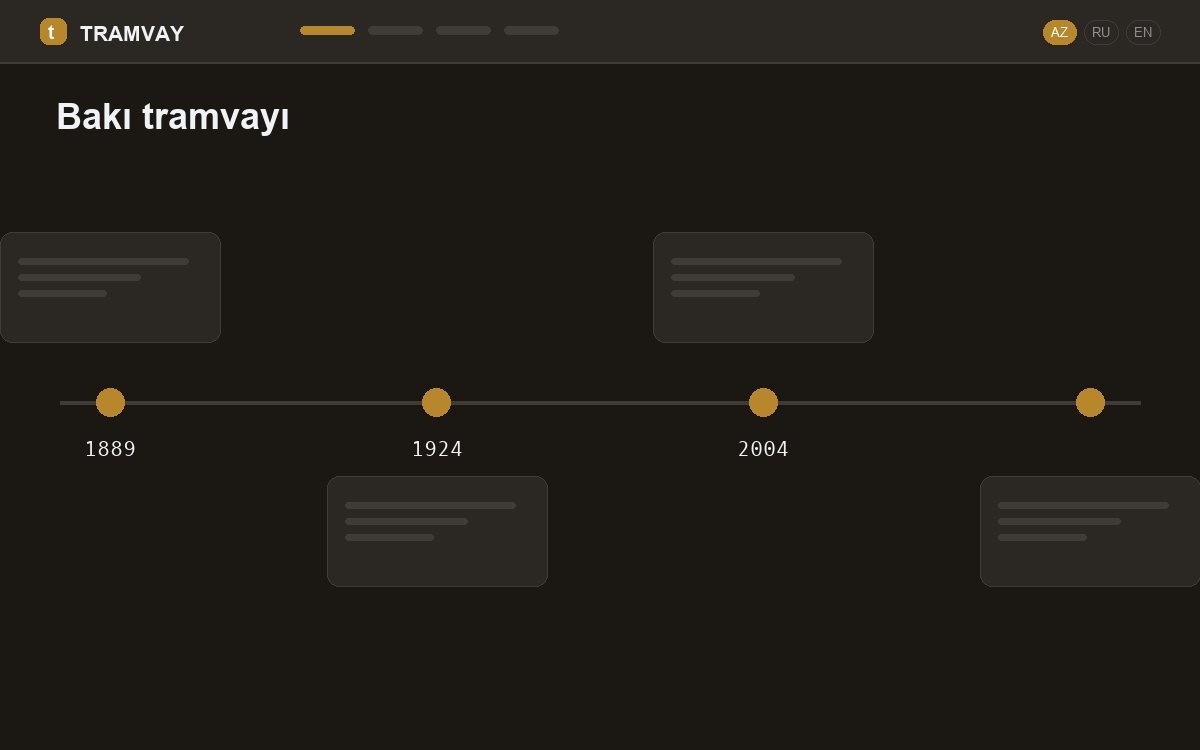
How it will look: each site gets its own colour scheme and structure.
Rail transport in Baku began with a horse tram in 1889. The electric tram opened on 8 February 1924; the first route ran from the railway station to Azneft Square.
By the late 1930s the network passed a hundred kilometres, then gave way to buses and the metro. The last routes closed in 2004, leaving photographs and rails under the asphalt.
A map of the lines by year
From horse cars to Soviet KTM trams
Why the network was dismantled
What is still visible in the city
A settlement on the Caspian shore: a sandy beach, a 17th-century mosque and the shrine behind its name.

A short mountain railway from the boulevard up to the Alley of Martyrs — the city's simplest lift since 1960.
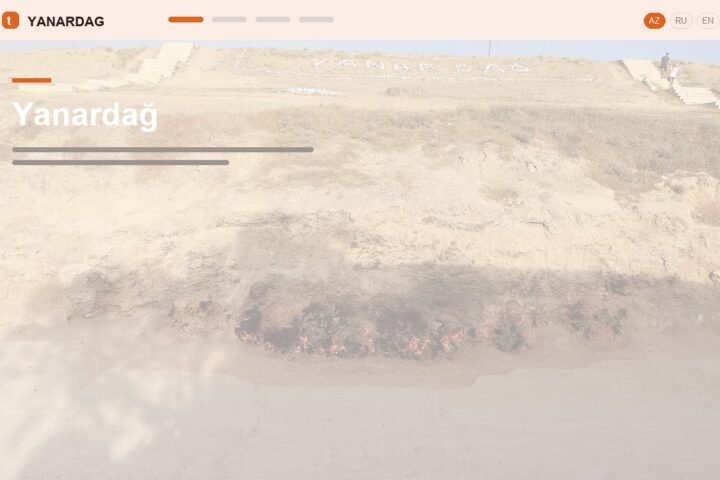
A hillside on the Absheron that has burned for decades — the plainest explanation of the “Land of Fire”.